Technische Leistung: Warum der Bell 429 ein stabiles Fluggerät ist
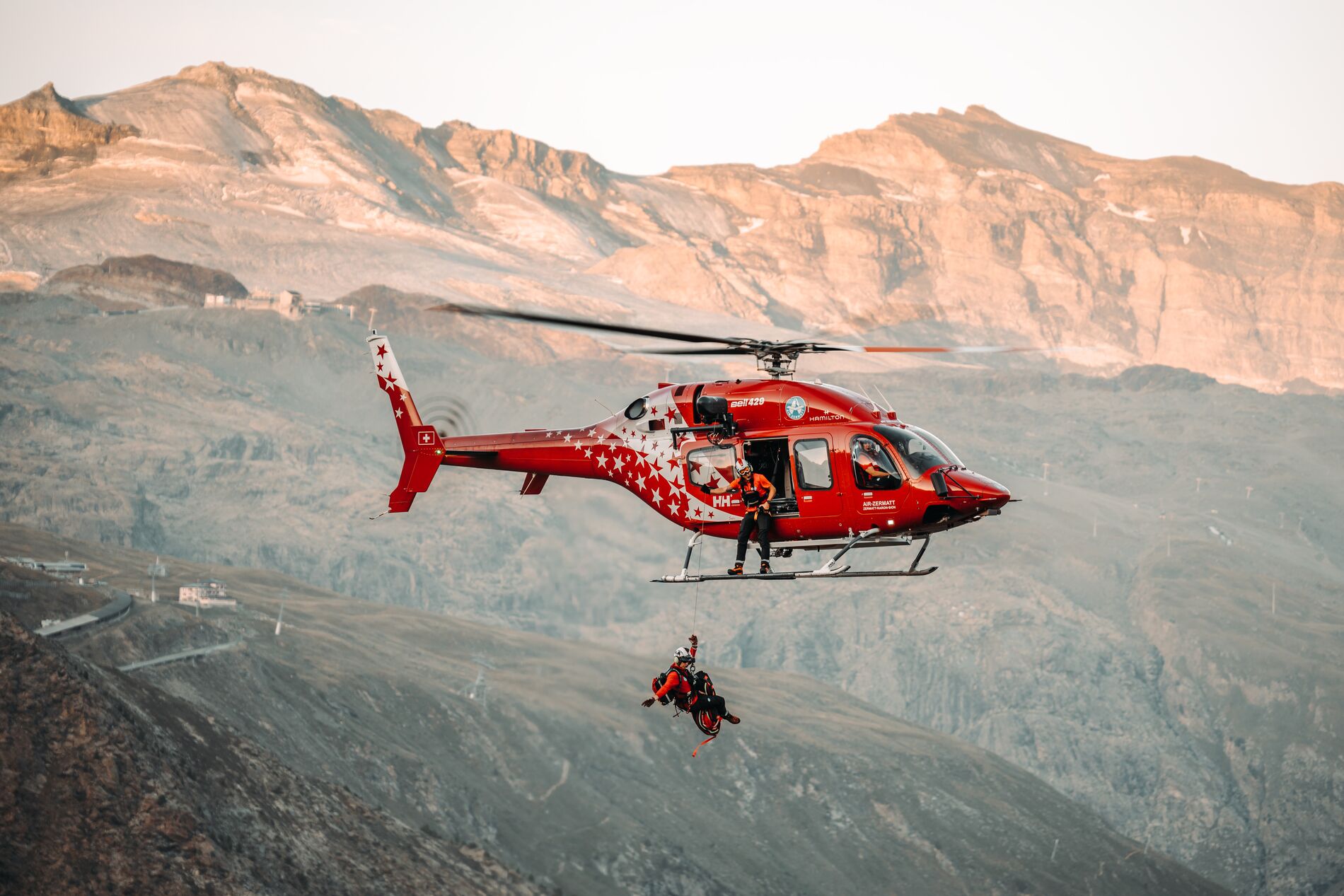
Die Alpen bieten extreme Einsatzbedingungen, darunter Windgeschwindigkeiten von 60 Knoten sowie Einsätze in großer Höhe und bei hohen Temperaturen. Während bei manchen Transportaufgaben ein 10-Passagier-Helikopter oder ein 15-sitziger Helikopter für größere Kapazitäten gefragt ist, wird der Bell 429 wegen seines hervorragenden Leistungsgewichtsverhältnisses und seiner unmittelbaren Reaktionsfähigkeit in engen Bergschluchten eingesetzt.
Präzisionstechnik für extreme Höhen
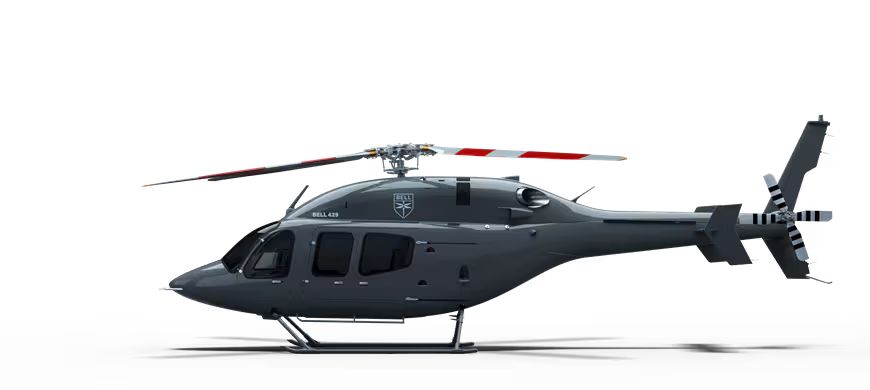
Die technischen Daten des Bell 429 sorgen für ein präzises Handling und eine direkte Reaktion der Heckrotorsteuerung. Der Bell 429 überzeugt in den Alpen, weil er dafür ausgelegt ist, auch in sauerstoffarmer Luft und bei Einsätzen in großer Höhe ein berechenbares Flugverhalten zu gewährleisten. Sein vierblättriges Rotorsystem mit hoher Trägheit ermöglicht gleichmäßige, präzise Steuereingaben und unterstützt dadurch ein stabiles Schweben bei Windenrettungen. Das fortschrittliche Rotorblattprofil wurde entwickelt, um auch in dünner Luft ausreichend Auftrieb zu gewährleisten und das weiche Steuergefühl zu reduzieren, das bei Einsätzen in großen Höhen auftreten kann. Ein großer und reaktionsschneller Heckrotor trägt dazu bei, eine starke Giersteuerung bei böigen Bedingungen an Bergkämmen zu gewährleisten. Die beiden PW207D1-Triebwerke liefern zuverlässige Leistung für präzise Schwebeflugeinsätze in beengten Bereichen. Das starre Verbund-Flugwerk wurde entwickelt, um Vibrationen zu reduzieren und eine stabile Arbeitsumgebung für Piloten und medizinische Teams zu schaffen. Zusammen sorgen diese Designelemente für die Flugeigenschaften, auf die sich die Crews von Air Zermatt bei anspruchsvollen Einsätzen in großer Höhe verlassen.
Bell 429 Leistungstabelle
Eine Kabine für anspruchsvolle medizinische Einsätze in großer Höhe
Die Kabine des 429-Helikopters ist für die Aufnahme einer Vielzahl moderner medizinischer Geräte ausgelegt. Die ergonomische Gestaltung ermöglicht dem Team, während der Einsätze mit der integrierten Intensivstation-Ausstattung auch umfangreiche medizinische Maßnahmen durchzuführen. Die Teams von Air Zermatt berichten, dass ihre Crews mit der gewählten medizinischen Ausstattung auch während des Flugs erweiterte Reanimationsmaßnahmen vornehmen können. Der gerade, ebene Kabinenboden und die zweiflügeligen Hecktüren verkürzen die Umlagerungszeit und erleichtern den Patiententransfer aus der kalten Außenumgebung.
Intensivmedizinische Ausstattung
- Intensivmedizinische Beatmungsgeräte und Spritzenpumpen: Für die kontinuierliche Medikamentengabe bei Langstreckentransporten zu großen medizinischen Zentren wie Bern.
- Integrierte Überwachung: Defibrillatoren, die während des Flugs EKG-Daten direkt an das Krankenhaus übermitteln können.
- Flexible Kabine: Schnelle Entfernung der Ausrüstung und ausreichend Platz, um bei Bedarf zwei Patienten gleichzeitig zu versorgen.
Vergleich von Einsatzvielfalt und hoher Kapazität
Air Zermatt entscheidet sich für den Bell 429, weil er Größe und Leistung optimal ausbalanciert. Während bei Schwerlasteinsätzen manchmal ein 10-Passagier-Helikopter oder ein 15-sitziger Helikopter für umfangreiche logistische Aufgaben eingesetzt wird, ist der 429 ein äußerst effektives Einsatzmittel für technische Windenrettungen und medizinische Evakuierungen, wenn der verfügbare Landeplatz begrenzt ist. Seine Agilität macht ihn zu einer idealen Lösung für die Täler und hohen Gipfel der Schweiz. Während größere Helikopter eine höhere Hubkapazität bieten, sind sie aufgrund ihrer Größe oft weniger geeignet für die beengten Landezonen und steilen Anflugwege, die im alpinen Gelände typisch sind.
Weltklasse-Logistik und globale Unterstützung
Die Einsätze von Air Zermatt setzen voraus, dass das Fluggerät jederzeit kurzfristig einsatzbereit ist. Dies wird durch das weltweite Bell-Supportnetzwerk ermöglicht. Von speziellen Spiegeln für Außenlastoperationen bis hin zur Kompatibilität mit Nachtsicht-Bildgebungssystemen (NVIS) bietet Bell maßgeschneiderte Lösungen, die die Einsatzbereitschaft des 429 unterstützen.
Sicherheit über das Flugwerk hinaus: Die BasiX-Pro-Avionik
Ein wesentlicher Grund, warum Piloten wie Gerold Biner dem Bell 429 auch bei schlechten Sichtverhältnissen im Gebirge vertrauen, ist die fortschrittliche integrierte BasiX-Pro-Avioniksuite.. Dieses System bietet hochauflösende „Glascockpit“-Anzeigen, die die Situationswahrnehmung der Piloten und das Workload-Management beim Navigieren durch Nebel oder Wolken unterstützen. Dank der Integration von SBAS-Navigation (Satellite Based Augmentation System) und WAAS (Wide Area Augmentation System) kann der 429 Einsätze unter anspruchsvollen Bedingungen mit eingeschränkter Sicht unterstützen. Die Suite reduziert die Arbeitsbelastung der Piloten bei Instrumentenübergängen und hilft ihnen dadurch, Gelände, Patientenversorgung und Kommunikationsaufgaben bei anspruchsvollen Einsätzen im Gebirge besser zu bewältigen.
Fazit: Weltweit führend bei Mehrzweckeinsätzen
Für Air Zermatt ist der Bell 429 das Luftfahrzeug, auf das sich die Crews in anspruchsvollen Einsatzumgebungen verlassen. Er vereint die Sicherheit einer zweimotorigen Plattform mit der Robustheit, die für Einsätze im alpinen Gelände erforderlich ist. Als leistungsfähiger und bewährter leichter zweimotoriger Helikopter setzt er weltweit weiterhin Maßstäbe für Rettungs-, Behörden- und Unternehmenseinsätze.
Interessiert an Einblicken von Bell?
Erhalten Sie exklusive, unveröffentlichte Updates, Videos und News zu Fluggeräten von Bell schneller als andere. Steigen Sie noch heute ein in die Zukunft des Vertikalhubs.